Artists on Couches: What does it mean to trust the creative process?
“Knowing the difference between what you planned and what you discovered is the best part of making.
Committing to the choice that was unknown moments earlier — that’s trusting the process.
For me, that’s the nature of working with wood – what the material reveals that you didn’t plan for.
Imperfections aren’t the flaw.
They’re the philosophy.
Some I embrace, some take me somewhere unexpected, better.
That’s how I learned trust!” – James Gilbert, Los Angeles, California @jamesgilbertstudio
@artistsoncouches
Share
James Gilbert in his studio, Los Angeles
Artists on Couches: What does it mean to trust the creative process?
“Knowing the difference between what you planned and what you discovered is the best part of making.
Committing to the choice that was unknown moments earlier — that’s trusting the process.
For me, that’s the nature of working with wood – what the material reveals that you didn’t plan for.
Imperfections aren’t the flaw.
They’re the philosophy.
Some I embrace, some take me somewhere unexpected, better.
That’s how I learned trust!” – James Gilbert, Los Angeles, California @jamesgilbertstudio
@artistsoncouches
Crowd Control
hc projects, Los Angeles, California
November 7 – 21
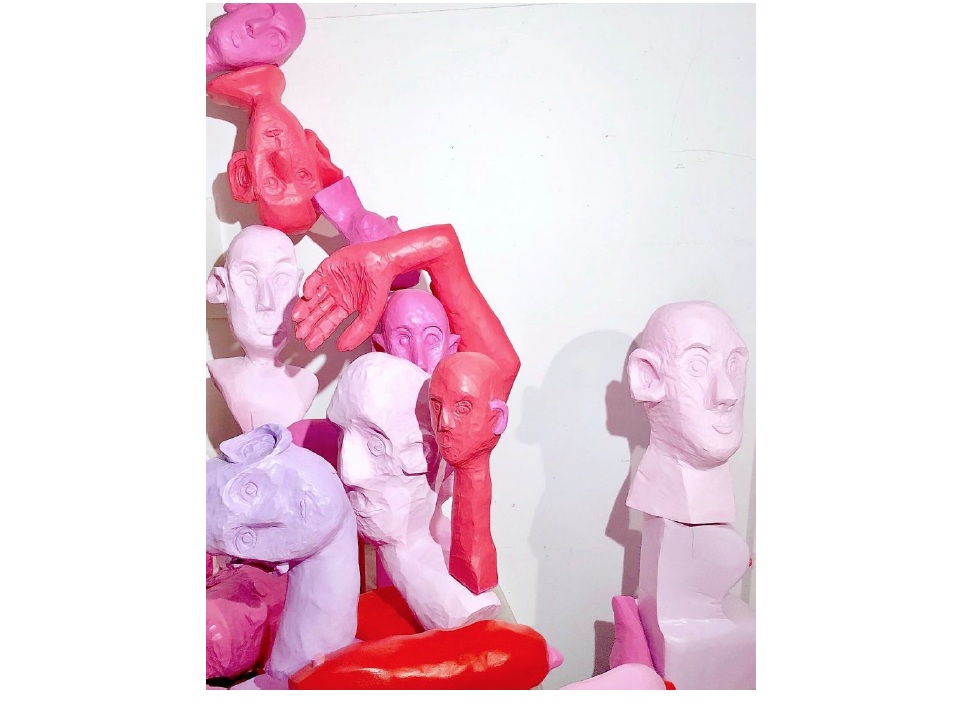
Crowd Control, a powerful new solo exhibition by James Gilbert that confronts the psychology of crowds and the turbulence of contemporary political behavior. Through vividly layered drawings and dynamic sculptures, Gilbert captures the tension between individuality and group identity in a time of social unrest and mass influence. His expressive figures and charged color palette transform empathy, fear, and persuasion into visceral visual form. Crowd Control invites viewers to reflect on the forces that shape collective action—and to consider their own place within it.
Share
hc projects, Los Angeles, California
November 7 – 21
Crowd Control, a powerful new solo exhibition by James Gilbert that confronts the psychology of crowds and the turbulence of contemporary political behavior. Through vividly layered drawings and dynamic sculptures, Gilbert captures the tension between individuality and group identity in a time of social unrest and mass influence. His expressive figures and charged color palette transform empathy, fear, and persuasion into visceral visual form. Crowd Control invites viewers to reflect on the forces that shape collective action—and to consider their own place within it.
Merger of the Artistic Flux / Interview with James Gilbert
Luxiders Magazine
From sculpture to performance art, the LA-based artist James Gilbert envisions a fascinatingly unique world through his art. We asked Gilbert about his experiences before and after creation, and his derivation points.
The Los Angeles-based multifaceted artist James Gilbert might be one of the purest transformative talents in art: What the artist takes as an inspiration to produce an artwork always comes from a merger of ‘everything’. Merging the moments gets more and more fascinating with Gilbert’s touch, as he interprets the materials to use in a way that matches Gilbert’s sensualistic, natural, and meaningful process of creation. On the other hand, what James Gilbert presents is beyond an artistic flux, but a milestone, a witness, and a commenter to the times we have been through and currently experiencing. The artist states “For me, the role of art is only powerful in shaping collective consciousness if we are actively engaged, paying attention and willing to think deeply and then behave accordingly,” when he is asked about his perception of art. Here is a heart-stopping interview with James Gilbert about his art and societal aspects of it.
From sculpture to performance art, the LA-based artist James Gilbert envisions a fascinatingly unique world through his art. We asked Gilbert about his experiences before and after creation, and his derivation points.
The Los Angeles-based multifaceted artist James Gilbert might be one of the purest transformative talents in art: What the artist takes as an inspiration to produce an artwork always comes from a merger of ‘everything’. Merging the moments gets more and more fascinating with Gilbert’s touch, as he interprets the materials to use in a way that matches Gilbert’s sensualistic, natural, and meaningful process of creation. On the other hand, what James Gilbert presents is beyond an artistic flux, but a milestone, a witness, and a commenter to the times we have been through and currently experiencing. The artist states “For me, the role of art is only powerful in shaping collective consciousness if we are actively engaged, paying attention and willing to think deeply and then behave accordingly,” when he is asked about his perception of art. Here is a heart-stopping interview with James Gilbert about his art and societal aspects of it.
We Did this to Ourselves, 2020,
wood, stain, pigmented wax
37 x 28 x 25 inches
Bakers Dozen, A Survey of thirteen Southern California contemporary art practices This summer will be the 8th installment of TAM’s innovative exploration of the Southern California Artistic landscape of the past year. Referencing the practice by bakers of including more than twelve in their dozen. TAM’s curatorial staff also generously includes more than twelve artistic practices in their survey exhibition. The selections within this exhibition reflect the preconceptions and biases of TAM curatorial staff, centering on Southern California artistic endeavors at this moment in time.
Three sculptures by James Gilbert will be included in the exhibition.
Share
Torrance Art Museum, Torrance, California
May 27 – June 17
We Did this to Ourselves, 2020,
wood, stain, pigmented wax
37 x 28 x 25 inches
Bakers Dozen, A Survey of thirteen Southern California contemporary art practices This summer will be the 8th installment of TAM’s innovative exploration of the Southern California Artistic landscape of the past year. Referencing the practice by bakers of including more than twelve in their dozen. TAM’s curatorial staff also generously includes more than twelve artistic practices in their survey exhibition. The selections within this exhibition reflect the preconceptions and biases of TAM curatorial staff, centering on Southern California artistic endeavors at this moment in time.
Three sculptures by James Gilbert will be included in the exhibition.
I Don’t Know, You Don’t Know, They Don’t Know
Solo exhibition at Erin Cluley Gallery, Dallas, Texas
October 8th – November 12th
Photographs by Kevin Todora
ERIN CLULEY GALLERY, Dallas Texas, is pleased to announce I Don’t Know, You Don’t Know, They Don’t Know – a solo exhibition by Los Angeles based artist James Gilbert. The exhibition will be on view October 8th through November 12th, 2022, at the gallery’s main location, 150 Manufacturing Street, Suite 210. An opening reception will be held Saturday, October 8th from 5 – 8 PM with the artist in attendance. The gallery is open weekly Wednesday through Saturday, 12 – 5 PM and by appointment.
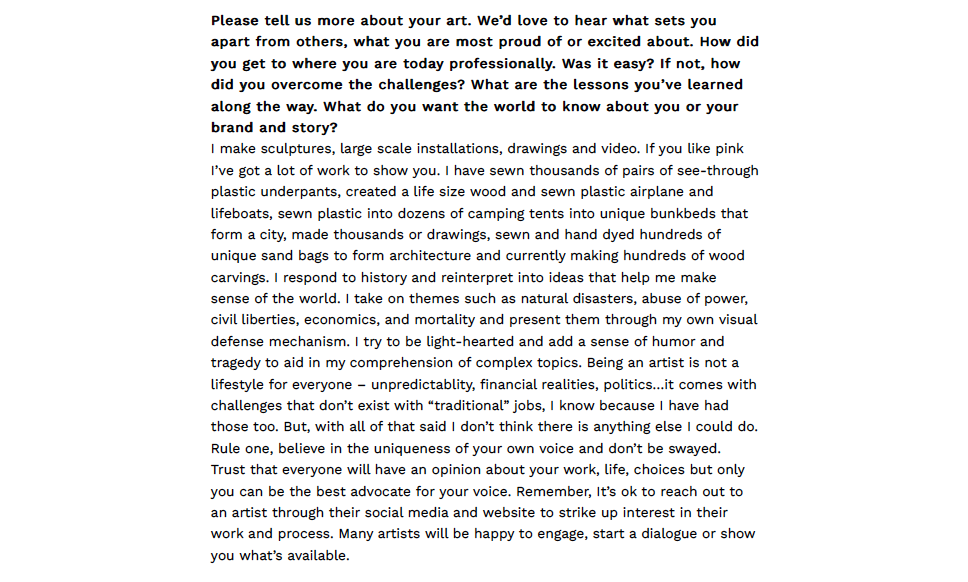
In his artistic practice, James Gilbert traverses a breadth of media all with an eye for whimsy, sincerity and style. His obsessive repetition of objects—rarely without his signature pink and white coloring—gives scale to the overwhelming accumulation of contemporary social injustices. Nonetheless, his flair for humor betrays a certain optimism, a willingness to play not as a coping mechanism, but as an exercise in possibility. Across his work, Gilbert allows for introspection: as viewers are encouraged to see clearer the blemishes and devastating absurdity that color our shared histories.
For his solo exhibition, I Don’t Know, You Don’t Know, They Don’t Know, James Gilbert explores themes of cultural heritage and genetic lineage—all with cutting wit. His bold figures show the talent of an artist fully confident in his abilities. Incorporating drawing and sculpture, Gilbert’s new work acknowledges the messy nature of community, not helped by the equally messy political and social climate of the past few years.
Gilbert’s use of raw, naturally-flawed materials—wood, wax and metal—conveys an honest uncertainty in what to make of the unfolding future. Half-human, Half-abstract figures continue their creator’s line of questioning; What is the legacy of contradicting ideologies in education and culture? How can we reconcile a dangerously forgetful history? Who knows what are the right questions to ask?
Presented in the gallery will be a selection of sculpture alongside a body of drawings – a dynamic and complex intersection of Gilbert’s practice. An installation of 138 drawings will cover one of the large walls in the gallery reinforcing the artist’s fascination with the stories told by faces and the changing of information over generations.
Gilbert states, “I believe in making work that unveils our human condition and also gestures toward the effort to understand cultural history and memory of being, time and place. For in this moment, I want to remain optimistic as sometimes you find yourself in a strange place and other times in a strange place you find yourself.”
I Don’t Know, You Don’t Know, They Don’t Know will be the artist’s second solo exhibition in Dallas. Gilbert’s first solo exhibition was in 2010 at Dallas Contemporary. His exhibition Warnings and Instructions was the inaugural exhibition in the museum’s Glass Street location.
150 MANUFACTURING STREET, SUITE 210 DALLAS, TEXAS 75207 UNITED STATES OF AMERICA
+ 214 760 1155
ERINCLULEY.COM
Share
Solo exhibition at Erin Cluley Gallery, Dallas, Texas
October 8th – November 12th
Photographs by Kevin Todora
ERIN CLULEY GALLERY, Dallas Texas, is pleased to announce I Don’t Know, You Don’t Know, They Don’t Know – a solo exhibition by Los Angeles based artist James Gilbert. The exhibition will be on view October 8th through November 12th, 2022, at the gallery’s main location, 150 Manufacturing Street, Suite 210. An opening reception will be held Saturday, October 8th from 5 – 8 PM with the artist in attendance. The gallery is open weekly Wednesday through Saturday, 12 – 5 PM and by appointment.
In his artistic practice, James Gilbert traverses a breadth of media all with an eye for whimsy, sincerity and style. His obsessive repetition of objects—rarely without his signature pink and white coloring—gives scale to the overwhelming accumulation of contemporary social injustices. Nonetheless, his flair for humor betrays a certain optimism, a willingness to play not as a coping mechanism, but as an exercise in possibility. Across his work, Gilbert allows for introspection: as viewers are encouraged to see clearer the blemishes and devastating absurdity that color our shared histories.
For his solo exhibition, I Don’t Know, You Don’t Know, They Don’t Know, James Gilbert explores themes of cultural heritage and genetic lineage—all with cutting wit. His bold figures show the talent of an artist fully confident in his abilities. Incorporating drawing and sculpture, Gilbert’s new work acknowledges the messy nature of community, not helped by the equally messy political and social climate of the past few years.
Gilbert’s use of raw, naturally-flawed materials—wood, wax and metal—conveys an honest uncertainty in what to make of the unfolding future. Half-human, Half-abstract figures continue their creator’s line of questioning; What is the legacy of contradicting ideologies in education and culture? How can we reconcile a dangerously forgetful history? Who knows what are the right questions to ask?
Presented in the gallery will be a selection of sculpture alongside a body of drawings – a dynamic and complex intersection of Gilbert’s practice. An installation of 138 drawings will cover one of the large walls in the gallery reinforcing the artist’s fascination with the stories told by faces and the changing of information over generations.
Gilbert states, “I believe in making work that unveils our human condition and also gestures toward the effort to understand cultural history and memory of being, time and place. For in this moment, I want to remain optimistic as sometimes you find yourself in a strange place and other times in a strange place you find yourself.”
I Don’t Know, You Don’t Know, They Don’t Know will be the artist’s second solo exhibition in Dallas. Gilbert’s first solo exhibition was in 2010 at Dallas Contemporary. His exhibition Warnings and Instructions was the inaugural exhibition in the museum’s Glass Street location.
150 MANUFACTURING STREET, SUITE 210 DALLAS, TEXAS 75207 UNITED STATES OF AMERICA
+ 214 760 1155
ERINCLULEY.COM
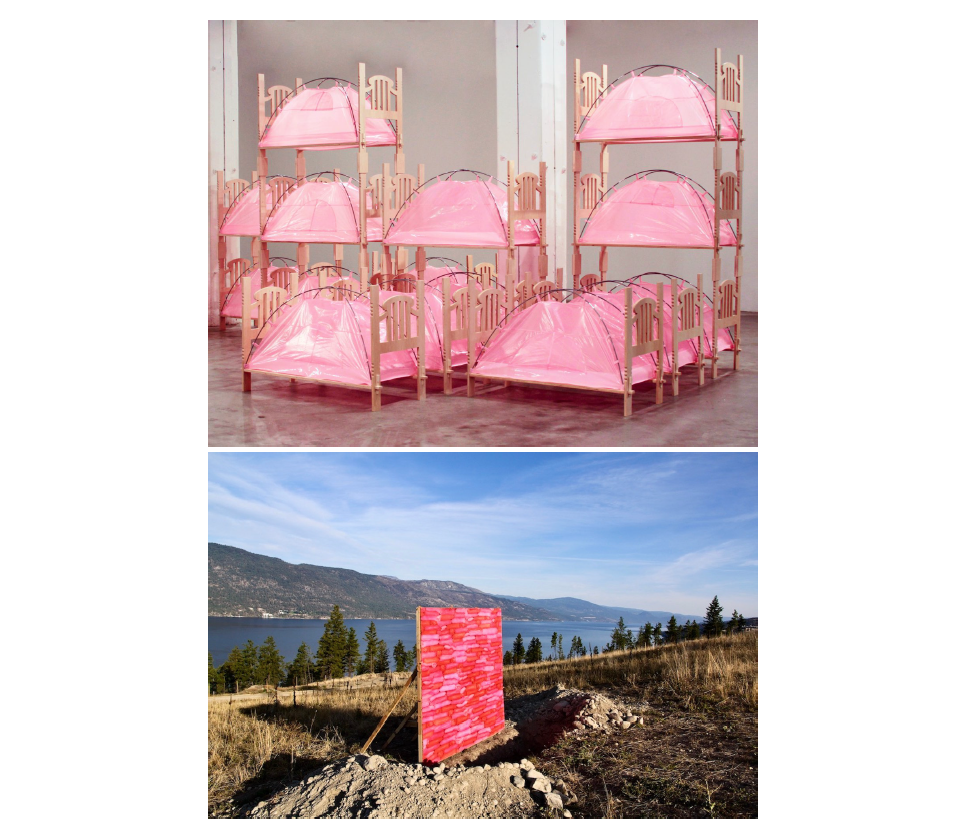
How Much Earth For Sale?
June 1- August 31, 4Ground Midwest Land Art Biennial
How Much Earth For Sale?, 2022
earth, concrete, wood, metal, paint
11 x 14 x 6 feet
A new rammed earth sculpture debuts at Franconia Sculpture Park for 4Ground Midwest Land Art Biennial.
4Ground: Midwest Land Art Biennial is pleased to announce the participating artists in the inaugural contemporary art festival taking place June-August 2022. Conceived by Franconia Sculpture Park Executive Director & Chief Curator in collaboration with more than 20+ community partners including tribal organizations, art museums, and land conservationists, 4Groundis a far-reaching initiative spanning four states and tribal lands of the Upper Midwest. 4Groundis designed to raise awareness around important land and water issues affecting the region while celebrating the art, land and history of the rural Midwest and boosting tourism of the region through suggested road trips to experience site-specific land art. www.4groundbiennial.org
Share
June 1- August 31, 4Ground Midwest Land Art Biennial
How Much Earth For Sale?, 2022
earth, concrete, wood, metal, paint
11 x 14 x 6 feet
A new rammed earth sculpture debuts at Franconia Sculpture Park for 4Ground Midwest Land Art Biennial.
4Ground: Midwest Land Art Biennial is pleased to announce the participating artists in the inaugural contemporary art festival taking place June-August 2022. Conceived by Franconia Sculpture Park Executive Director & Chief Curator in collaboration with more than 20+ community partners including tribal organizations, art museums, and land conservationists, 4Groundis a far-reaching initiative spanning four states and tribal lands of the Upper Midwest. 4Groundis designed to raise awareness around important land and water issues affecting the region while celebrating the art, land and history of the rural Midwest and boosting tourism of the region through suggested road trips to experience site-specific land art. www.4groundbiennial.org
New Interview – Meet James Gilbert / Sculptor & Installation Artist
The Modern Doubt, 2019, wood paint, pigmented wax, 22 x 20 x 14inches
Lyons Weir Gallery, New York
Chrystalistasis explores the work and practice of 50 artists during this unique time of isolation and social unrest. Online group exhibition
Share
The Modern Doubt, 2019, wood paint, pigmented wax, 22 x 20 x 14inches
Lyons Weir Gallery, New York
Chrystalistasis explores the work and practice of 50 artists during this unique time of isolation and social unrest. Online group exhibition
A Short Survey of Contemporary Abstraction
April 1 - May 3
There’s Fragility in Protecting What You Have, 2016, wood, varnish, wax, acrylic paint, 26 x 44 x 11 inches
A Short Survey of Contemporary Abstraction, curator James Austin Murray
Sandy Bennett Gallery, Bergen Center for Performing Arts, Englewood, NJ
Share
There’s Fragility in Protecting What You Have, 2016, wood, varnish, wax, acrylic paint, 26 x 44 x 11 inches
A Short Survey of Contemporary Abstraction, curator James Austin Murray
Sandy Bennett Gallery, Bergen Center for Performing Arts, Englewood, NJ
On Bodies: The Goss-Michael Foundation, Dallas, TX
November 3, 2017 - March 1, 2018
Share
Narrow Passage – Noysky Projects, Los Angeles
October 14 - November 12
It May Be Time to Rethink the Way You Think, 2017, hand-dyed canvas, polyester rope, wood, wax, 88 x 40 x 27inches
The Show that the LA Times, Curate LA, Venison Magazine, and Art and Cake Have Been Talking About
A Narrow Passage, a multidisciplinary exhibition featuring the work of Lana Duong, James Gilbert, Jenalee Harmon, Megan Mueller, Jenny Rask, Nicolas Shake, Katya Usvitsky, and May Wilson, has already been received with great fanfare. Major media outlets like the Los Angeles Times and the international publication, Art Week, have been promoting the show, as well as well-respected regional outlets, like Curate LA, Art and Cake, Venison Magazine, Asymmetric Magazine, and DoLA:
Noysky Projects presents A Narrow Passage, a multidisciplinary exhibition that explores themes of constriction, compression, and concealment as a way to relate to personal biographies.
Abstract works from A Narrow Passage are comprised of materials that twist, turn, bond, choke, or smother to the point of collapse, while others have approached constriction in a more gratifying way, like the comforting sensation of a warm embrace or the euphoric feeling of pleasure derived from pain.
Artists have used the compression of space as a visual device to relate to the body for thousands of years. Ancient Egyptians wrapped the body in ornate sheaths that accentuated the unique forms of the individual, while providing familiar biographical landmarks to aid the spirit in its journey to the afterlife. Shibari, a form of Japanese rope bondage developed during the Edo period, was used as a decorative device to display captive prisoners like trophies, creating complex patterns and shapes that pressed into the skin. Twentieth-Century works from Man Ray and Christo & Jeanne-Claude have used concealment as a means to invoke mystery, transformation, and revelation, while Eva Hesse and Jackie Winsor put the body back into abstraction, using hands-on processes and tactile materials that actively rejected the detached qualities of the minimalists.
Many of the works in A Narrow Passage employ elements of playfulness with form while acknowledging the weight and density of the artist’s chosen materials. Some of the works in A Narrow Passage relate to the quirks of the body, straddling the line between fragility and rigidity, using irregular, organic forms. Others have used tension to reveal internal conflict, illuminating our efforts to adapt to our new political realities while also protecting the ideas we cherish most.
Share
It May Be Time to Rethink the Way You Think, 2017, hand-dyed canvas, polyester rope, wood, wax, 88 x 40 x 27inches
The Show that the LA Times, Curate LA, Venison Magazine, and Art and Cake Have Been Talking About
A Narrow Passage, a multidisciplinary exhibition featuring the work of Lana Duong, James Gilbert, Jenalee Harmon, Megan Mueller, Jenny Rask, Nicolas Shake, Katya Usvitsky, and May Wilson, has already been received with great fanfare. Major media outlets like the Los Angeles Times and the international publication, Art Week, have been promoting the show, as well as well-respected regional outlets, like Curate LA, Art and Cake, Venison Magazine, Asymmetric Magazine, and DoLA:
Noysky Projects presents A Narrow Passage, a multidisciplinary exhibition that explores themes of constriction, compression, and concealment as a way to relate to personal biographies.
Abstract works from A Narrow Passage are comprised of materials that twist, turn, bond, choke, or smother to the point of collapse, while others have approached constriction in a more gratifying way, like the comforting sensation of a warm embrace or the euphoric feeling of pleasure derived from pain.
Artists have used the compression of space as a visual device to relate to the body for thousands of years. Ancient Egyptians wrapped the body in ornate sheaths that accentuated the unique forms of the individual, while providing familiar biographical landmarks to aid the spirit in its journey to the afterlife. Shibari, a form of Japanese rope bondage developed during the Edo period, was used as a decorative device to display captive prisoners like trophies, creating complex patterns and shapes that pressed into the skin. Twentieth-Century works from Man Ray and Christo & Jeanne-Claude have used concealment as a means to invoke mystery, transformation, and revelation, while Eva Hesse and Jackie Winsor put the body back into abstraction, using hands-on processes and tactile materials that actively rejected the detached qualities of the minimalists.
Many of the works in A Narrow Passage employ elements of playfulness with form while acknowledging the weight and density of the artist’s chosen materials. Some of the works in A Narrow Passage relate to the quirks of the body, straddling the line between fragility and rigidity, using irregular, organic forms. Others have used tension to reveal internal conflict, illuminating our efforts to adapt to our new political realities while also protecting the ideas we cherish most.
Plastic Primitive – Signed, A Limited Edition Colouring Book
July 12
NOW AVAILABLE
James Gilbert / Garth Bowden – Plastic Primitive
Signed by both artists, Numbered, Limited Edition of 100, 34 black and white Plates
$25 with free shipping in the US, All others please inquire.
Contact me directly for your copy.
Share
NOW AVAILABLE
James Gilbert / Garth Bowden – Plastic Primitive
Signed by both artists, Numbered, Limited Edition of 100, 34 black and white Plates
$25 with free shipping in the US, All others please inquire.
Contact me directly for your copy.
Plastic Primitive
June 30 - September 28
James Gilbert & Garth Bowden, Plastic Primitive, Paris, France
An exhibition of new sculptures, drawings and photographs from Los Angeles based artist James Gilbert and Paris based Garth Bowden.
This exhibition is the culmination of an on-going conversation between the two artists and their individual studio practices. For the first time, the artists have proposed a joint residency together in France where all work is created along side each other, in response to each other, specifically for this exhibition.
This dialogue between the two artists marries the language and structures of primitive visual forms with images from contemporary pop culture. Setting in play contradictory elements – objects of symbolic meaning used for ritual and cultural identity versus objects devoid of meaning – the products of consumerist pop society such as plastic toys, games and cartoons.
There is an interest in defining a period of our collective history and cultural understanding. Drawing from the vitality and power of primitive tribal art and the banal objects of pop culture, both artists seek to compress these apparently opposing elements into objects of meaning and humour.
“The conscious search in history for a more deeply expressive, permanent human nature and cultural structure in contrast to the nascent modern realties.” Stanley Diamond, “In Search of the Primitive”
LeStudio, Paris, France
Share
James Gilbert & Garth Bowden, Plastic Primitive, Paris, France
An exhibition of new sculptures, drawings and photographs from Los Angeles based artist James Gilbert and Paris based Garth Bowden.
This exhibition is the culmination of an on-going conversation between the two artists and their individual studio practices. For the first time, the artists have proposed a joint residency together in France where all work is created along side each other, in response to each other, specifically for this exhibition.
This dialogue between the two artists marries the language and structures of primitive visual forms with images from contemporary pop culture. Setting in play contradictory elements – objects of symbolic meaning used for ritual and cultural identity versus objects devoid of meaning – the products of consumerist pop society such as plastic toys, games and cartoons.
There is an interest in defining a period of our collective history and cultural understanding. Drawing from the vitality and power of primitive tribal art and the banal objects of pop culture, both artists seek to compress these apparently opposing elements into objects of meaning and humour.
“The conscious search in history for a more deeply expressive, permanent human nature and cultural structure in contrast to the nascent modern realties.” Stanley Diamond, “In Search of the Primitive”
LeStudio, Paris, France
Nakid Magazine – Features James Gilbert as Artist to Watch
“I think of each pair of underpants as an intimate portrait. They are an examination of the large amount of intimate and private information we willingly share through social media, reality television and 24-hour news cycles – the immense fascination with celebrity and pop culture. Each pair of underpants is sewn from transparent industrial plastic then embellished with beads, zippers or sequins, like layers of experience, personality and behavior. The underpants expose our most intimate information – revealing our perviness, opinions, quirkiness, sense of humor and a narrative of our culture.”
“I think of each pair of underpants as an intimate portrait. They are an examination of the large amount of intimate and private information we willingly share through social media, reality television and 24-hour news cycles – the immense fascination with celebrity and pop culture. Each pair of underpants is sewn from transparent industrial plastic then embellished with beads, zippers or sequins, like layers of experience, personality and behavior. The underpants expose our most intimate information – revealing our perviness, opinions, quirkiness, sense of humor and a narrative of our culture.”
James Gilbert
A Historic Point of Interest and other Landmarks
January 26 - March 5
A solo exhibition features a large site-specific work that consumes the gallery with a selection of smaller works that address destruction of architecture, intentional actions that destroy architecturally important and significant cultural heritage sites. The labor-intensive process of hand sewing and hand-dyeing hundreds of visually dense canvas objects that weigh upon or support fragile wood structures that remind us of relief carvings, elaborately designed doors, buttresses, architectural joints and bridges.
Natural disasters and accidents are inevitable but it is human aggression where we experience the loss of art, architecture and historical sites that are neither designed nor intends to be destroyed. To deliberately eradicate identity is to eradicate art and objects of symbolic meaning. We have witnessed systematic destruction of heritage as an attempt to destroy cultural diversity through religious or ideological reasoning, political agenda, activism or cultural curation. I wanted to reimagine an object that is simultaneously a symbol and protectant. When building barricades for fortification in front of and around culturally significant objects and architecture they then become the new identity and description for the object they are protecting. Through the use of common art making materials: paint, canvas, marble and wood, they are reinterpreted as devices to defend, deter or lessen destruction but also form a new autonomous work to be visited, viewed and contemplated.
PYO Gallery
1100 South Hope Street #105
Los Angeles, CA 90015 pyogalleryla.com
Share
A solo exhibition features a large site-specific work that consumes the gallery with a selection of smaller works that address destruction of architecture, intentional actions that destroy architecturally important and significant cultural heritage sites. The labor-intensive process of hand sewing and hand-dyeing hundreds of visually dense canvas objects that weigh upon or support fragile wood structures that remind us of relief carvings, elaborately designed doors, buttresses, architectural joints and bridges.
Natural disasters and accidents are inevitable but it is human aggression where we experience the loss of art, architecture and historical sites that are neither designed nor intends to be destroyed. To deliberately eradicate identity is to eradicate art and objects of symbolic meaning. We have witnessed systematic destruction of heritage as an attempt to destroy cultural diversity through religious or ideological reasoning, political agenda, activism or cultural curation. I wanted to reimagine an object that is simultaneously a symbol and protectant. When building barricades for fortification in front of and around culturally significant objects and architecture they then become the new identity and description for the object they are protecting. Through the use of common art making materials: paint, canvas, marble and wood, they are reinterpreted as devices to defend, deter or lessen destruction but also form a new autonomous work to be visited, viewed and contemplated.
PYO Gallery
1100 South Hope Street #105
Los Angeles, CA 90015 pyogalleryla.com
LA Art Show
January 27 - 31
Los Angeles Convention Center 1201 South Figueroa Center Street West Hall Los Angeles, CA 90015
PYO Gallery, Los Angeles, Seoul, Beijing – Booth 621/720
Share
Los Angeles Convention Center
1201 South Figueroa Center Street West Hall
Los Angeles, CA 90015
PYO Gallery, Los Angeles, Seoul, Beijing – Booth 621/720
Art of War and Peace
ART TALK - KCRW, Edward Goldman discusses Sledgehammer.Bullet.Bomb. exhibition
Los Angeles’ art scene continues to burst with high profile museum and gallery exhibitions. But today, I want to share with you a few intriguing and delightful discoveries I made somewhat off the beaten path.
At Manhattan Beach Art Center, which is only a half hour drive from LA, there is an exhibition with a name that stops you in your tracks: Sledgehammer. Bullet. Bomb. With what’s happening right now in the world, this exhibition by LA-based artist, James Gilbert, makes a particularly strong statement about “human aggression” [leading to] the loss of art, architecture, and historical sites.”
Gilbert creates sculptural artworks that manifest tension between elaborate, precarious wooden structures and what looks like a multitude of sandbags. Some of the structures seem ready to collapse under the weight of the bags. Others lean against each other in a game of push and pull.
Two specially commissioned artworks communicate a sense of destruction and protection. With a sledgehammer, the artist broke through the walls, left the debris on the floor, and then packed the hole with dozens of stuffed canvas bags. For me, all of the above evoke memories of attempts to protect major cultural sites around the world not only in the past, but in current military and political upheavals as well.
Los Angeles’ art scene continues to burst with high profile museum and gallery exhibitions. But today, I want to share with you a few intriguing and delightful discoveries I made somewhat off the beaten path.
At Manhattan Beach Art Center, which is only a half hour drive from LA, there is an exhibition with a name that stops you in your tracks: Sledgehammer. Bullet. Bomb. With what’s happening right now in the world, this exhibition by LA-based artist, James Gilbert, makes a particularly strong statement about “human aggression” [leading to] the loss of art, architecture, and historical sites.”
Gilbert creates sculptural artworks that manifest tension between elaborate, precarious wooden structures and what looks like a multitude of sandbags. Some of the structures seem ready to collapse under the weight of the bags. Others lean against each other in a game of push and pull.
Two specially commissioned artworks communicate a sense of destruction and protection. With a sledgehammer, the artist broke through the walls, left the debris on the floor, and then packed the hole with dozens of stuffed canvas bags. For me, all of the above evoke memories of attempts to protect major cultural sites around the world not only in the past, but in current military and political upheavals as well.
photographs by Edward Goldman
Protective Devices – Interview with James Gilbert on his Recent solo exhibition Sledgehammer.Bullet.Bomb
Not the guarded, but the guardians in James Gilbert’s new work by Bondo Wyszpolski
A Historic Point of Interest and other Landmarks on Titan Road 2015
Pink sandbags and a few two-by-fours to keep them propped up. What shall we make of this? Out of the gate, I was perplexed and, honestly, not too interested. So, that’s my starting point in what turned out to be a rewarding encounter and learning experience when I met James Gilbert, whose solo exhibition, “Sledgehammer.Bullet.Bomb,” opens this evening at the Manhattan Beach Art Center.
Curated by Homeira Goldstein and presented by Time 4 Art, the show contains nine new sculptures and two site-specific works, plus a video that addresses intentional destruction of cultural heritage sites. But is the work on view really serious or just playful, or both?
Well, it’s both. Gilbert is a thoughtful artist who’s unafraid to push buttons and boundaries, with what I’m guessing is an impish sense of humor. We met recently over dinner at the exclusive Goldstein Café and talked far into the night.
THE SYMBOL BECOMES THE OBJECT
“Dealing with basic compositional elements is never enough for me,” Gilbert says. “It has to be something that resonates with some kind of social impact. Those are the kinds of projects I really gear myself towards.”
Although the projects themselves vary, he adds, “It always has to deal with social issues and identity. It could be social media issues, women’s rights issues, workers’ issues. Ultimately, you can distill it down in terms of where does identity come from. In this particular project, it has to do with destruction of cultural heritage sites. When you destroy those things you destroy part of cultural identity,which distills down to destroying the identity of a culture and a people.”
Does this series (“Sledgehammer.Bullet.Bomb”) relate to and resonate with what’s happening in the world right now?
“Absolutely,” Gilbert replies. “There’s this systemic kind of destruction in the Middle East, and people dealing with (the willful eradication of) temples or cathedrals or relics.”
It’s hard not to think of what has occurred in Palmyra as well as ancient sites in Mosul, Nineveh, Nimrud, Hatra, and other Syrian or Iraqi cities. Even the Israeli policy of bulldozing the homes of alleged Palestinian terrorists seems to fall into this category.
Still, the question might be lingering: Why the sandbags, the wood frames, and the color pink. What’s up with that?
“I was looking at World War I trench art,” Gilbert explains, “which led me to start looking at pictures from World War II. Something that kept coming up were cathedrals or monuments or frescos: They have these sandbags in front of them, protecting them from bombing. And so it occurred to me that these things that were protecting were actually becoming a new symbol for what was behind them.”
In case you’re skimming this article, the last sentence is worth re-reading. If you’ve got one handy, use a highlighter.
This was how Leonardo da Vinci’s fresco, “The Last Supper,” was protected and survived the bombing of Santa Maria delle Grazie in August, 1943
Gilbert references one of the pieces in the show, a buttress of sorts with sandbags. “I was thinking of a picture like ‘The Last Supper,’ and there’s always sandbags against it.” For Gilbert, the focus is not on Leonardo’s fresco, but rather what’s trying to keep it safe. Or, put mildly, the protector without the protectee.
“I like the idea that these things that are protecting it are the symbol and then we move them off, and then they become their own individual kind of piece.
“And so what I do,” Gilbert continues, “is I take the sandbags and the buttress and I move it to the center of the room with these architectural elements, which has kind of this phony structure to hold it up, but also it becomes like a color-field painting.”
TICKLED PINK
Did your eyes linger over those words “becomes like a color-field painting”?
It certainly seems incongruous, sandbags as they might have been used during warfare, that is, aerial bombardment, to safeguard irreplaceable art or artifacts, with the color pink. But let’s listen in on what James Gilbert has to say.
“I’ve used pink a lot in my work,” he explains. “In a lot of my projects there’s two parts. There’s always the serious part, and then there’s always the part where I try to bring in a sense of humor.” And with regard to “Sledgehammer.Bullet.Bomb,” “because I already have this element of destruction in it, I wanted to bring it back in terms of perception, to bring a more vibrant kind of playful vibe to it, a softness. Pink is a color I’ve often used for that. This one has a little bit of purple in it too, with a different meaning, but the pinks and the purples really bring a softness and a vibrancy to it.”
A Bunch of dum dums tried to Destroy it while I was in Charge of Protecting It 2015
Lest it seem like a purely arbitrary choice, Gilbert then makes one thing clear: “Everything from the materials to the colors is always really relevant to me.” And with those words we are left to our own devices, as to whether the clash of battlefield and playground aesthetics work for or against our appreciation of the finished product.
Each work, however, takes hours, days, perhaps weeks to construct.
“There are hundreds and hundreds of pieces,” Gilbert says, “and each one is handsewn, hand-dyed, filled, and then I have these elaborate wood structures that take an immense amount of time in terms of all these little details. So it’s really a labor intensive process.”
As some of his previous endeavors have shown, Gilbert opts for more rather than less.
“Every so often I review what I’ve done and what I’m trying to communicate in a bigger picture. I’ve noticed that everything is in huge, huge multiples, and lots of layers, and really (involves) a physical process in terms of making the work. I don’t know why I do it; it’s just that I have to see it. And so, when I decide I want to do a project, I always do so many multiples because it plays into this massness of what I’m trying to communicate.”
Well, for one it’s more impressive that way. You can look at one terracotta warrior, ho-hum, or you can gasp at an area the size of a football field that’s packed with hundreds of them.
Gilbert mentions that there are still three more pieces he needs to finish for the show.
One of our dining companions, a fellow named Arnold, leans across the table and says: “Instead of being here, you should be working on those three pieces.”
Gilbert laughs. “Oh, man, I’m exhausted!”
The next morning he was back in the studio.
A Historic Point of Interest and other Landmarks on Titan Road 2015
Pink sandbags and a few two-by-fours to keep them propped up. What shall we make of this? Out of the gate, I was perplexed and, honestly, not too interested. So, that’s my starting point in what turned out to be a rewarding encounter and learning experience when I met James Gilbert, whose solo exhibition, “Sledgehammer.Bullet.Bomb,” opens this evening at the Manhattan Beach Art Center.
Curated by Homeira Goldstein and presented by Time 4 Art, the show contains nine new sculptures and two site-specific works, plus a video that addresses intentional destruction of cultural heritage sites. But is the work on view really serious or just playful, or both?
Well, it’s both. Gilbert is a thoughtful artist who’s unafraid to push buttons and boundaries, with what I’m guessing is an impish sense of humor. We met recently over dinner at the exclusive Goldstein Café and talked far into the night.
THE SYMBOL BECOMES THE OBJECT
“Dealing with basic compositional elements is never enough for me,” Gilbert says. “It has to be something that resonates with some kind of social impact. Those are the kinds of projects I really gear myself towards.”
Although the projects themselves vary, he adds, “It always has to deal with social issues and identity. It could be social media issues, women’s rights issues, workers’ issues. Ultimately, you can distill it down in terms of where does identity come from. In this particular project, it has to do with destruction of cultural heritage sites. When you destroy those things you destroy part of cultural identity,which distills down to destroying the identity of a culture and a people.”
Does this series (“Sledgehammer.Bullet.Bomb”) relate to and resonate with what’s happening in the world right now?
“Absolutely,” Gilbert replies. “There’s this systemic kind of destruction in the Middle East, and people dealing with (the willful eradication of) temples or cathedrals or relics.”
It’s hard not to think of what has occurred in Palmyra as well as ancient sites in Mosul, Nineveh, Nimrud, Hatra, and other Syrian or Iraqi cities. Even the Israeli policy of bulldozing the homes of alleged Palestinian terrorists seems to fall into this category.
Still, the question might be lingering: Why the sandbags, the wood frames, and the color pink. What’s up with that?
“I was looking at World War I trench art,” Gilbert explains, “which led me to start looking at pictures from World War II. Something that kept coming up were cathedrals or monuments or frescos: They have these sandbags in front of them, protecting them from bombing. And so it occurred to me that these things that were protecting were actually becoming a new symbol for what was behind them.”
In case you’re skimming this article, the last sentence is worth re-reading. If you’ve got one handy, use a highlighter.
This was how Leonardo da Vinci’s fresco, “The Last Supper,” was protected and survived the bombing of Santa Maria delle Grazie in August, 1943
Gilbert references one of the pieces in the show, a buttress of sorts with sandbags. “I was thinking of a picture like ‘The Last Supper,’ and there’s always sandbags against it.” For Gilbert, the focus is not on Leonardo’s fresco, but rather what’s trying to keep it safe. Or, put mildly, the protector without the protectee.
“I like the idea that these things that are protecting it are the symbol and then we move them off, and then they become their own individual kind of piece.
“And so what I do,” Gilbert continues, “is I take the sandbags and the buttress and I move it to the center of the room with these architectural elements, which has kind of this phony structure to hold it up, but also it becomes like a color-field painting.”
TICKLED PINK
Did your eyes linger over those words “becomes like a color-field painting”?
It certainly seems incongruous, sandbags as they might have been used during warfare, that is, aerial bombardment, to safeguard irreplaceable art or artifacts, with the color pink. But let’s listen in on what James Gilbert has to say.
“I’ve used pink a lot in my work,” he explains. “In a lot of my projects there’s two parts. There’s always the serious part, and then there’s always the part where I try to bring in a sense of humor.” And with regard to “Sledgehammer.Bullet.Bomb,” “because I already have this element of destruction in it, I wanted to bring it back in terms of perception, to bring a more vibrant kind of playful vibe to it, a softness. Pink is a color I’ve often used for that. This one has a little bit of purple in it too, with a different meaning, but the pinks and the purples really bring a softness and a vibrancy to it.”
A Bunch of dum dums tried to Destroy it while I was in Charge of Protecting It 2015
Lest it seem like a purely arbitrary choice, Gilbert then makes one thing clear: “Everything from the materials to the colors is always really relevant to me.” And with those words we are left to our own devices, as to whether the clash of battlefield and playground aesthetics work for or against our appreciation of the finished product.
Each work, however, takes hours, days, perhaps weeks to construct.
“There are hundreds and hundreds of pieces,” Gilbert says, “and each one is handsewn, hand-dyed, filled, and then I have these elaborate wood structures that take an immense amount of time in terms of all these little details. So it’s really a labor intensive process.”
As some of his previous endeavors have shown, Gilbert opts for more rather than less.
“Every so often I review what I’ve done and what I’m trying to communicate in a bigger picture. I’ve noticed that everything is in huge, huge multiples, and lots of layers, and really (involves) a physical process in terms of making the work. I don’t know why I do it; it’s just that I have to see it. And so, when I decide I want to do a project, I always do so many multiples because it plays into this massness of what I’m trying to communicate.”
Well, for one it’s more impressive that way. You can look at one terracotta warrior, ho-hum, or you can gasp at an area the size of a football field that’s packed with hundreds of them.
Gilbert mentions that there are still three more pieces he needs to finish for the show.
One of our dining companions, a fellow named Arnold, leans across the table and says: “Instead of being here, you should be working on those three pieces.”
Gilbert laughs. “Oh, man, I’m exhausted!”
The next morning he was back in the studio.
GERMINATING IN A JOURNAL
James Gilbert was born in Southern California, but because his father was in the military the family was often on the move.
“So I have this sense of constantly adjusting, constantly evaluating, constantly kind of figuring out different parts of the country and different parts of the world, and I think that’s been good for me in terms of that sense of balance that I have.”
As for an early interest in art, “I always liked making stuff,” Gilbert says, “and I didn’t know there was a term for being an artist. I just wanted to build something with my hands.” Later, he discovered that he didn’t have to fall into a traditional occupation. “I learned that there was an option to infuse my own interest and my own biography and my own sense of direction in terms of issues I like to deal with. That’s when I started to realize that (a career in art) was a viable thing and something that would be important for me.”
Destroyed #4, 2015
It wasn’t just the visual arts that nudged him forward.
“Besides my art background I have a theater background and a film background, and so to me a successful show is (one in which) I can combine lots of ideas. I like reading philosophy, I like listening to pop music, I listen to old music; there’s not really anything that I draw a line (against). I think it’s all fair game.” Furthermore, “I studied English, and I studied creative writing extensively in college. I find that writing short stories and essays really helps to clarify some of my ideas.”
Gilbert has been keeping a journal for well over 20 years, and that’s where many of his ideas incubate. The topics, naturally, are diverse. “I’ve started pieces and inserted little drawings on my studio wall for years, not knowing what I was going to be doing with it. It all comes to this head when I can resolve it, because there’s nothing more pointless to me than starting on something that I can’t resolve.”
Meanwhile, Gilbert has to sift through the same barrage of impressions–politics, pop culture, family, religion, war–that the rest of us encounter daily as well. It’s pretty much a nonstop flight, but what Gilbert is looking for are themes or subjects with a more permanent resonance. That’s where his journals come into the picture.
“I did this experiment about a year and a half ago,” he says. “I took all of the journals I’d made for 20 years, and I went down to Mexico for a month to read them, which I’d never done. I actually chose specific points in those journals where things made sense when I was 16 or 20, and I pulled them out to see if they still resonated.”
Those that did were clearly more relevant.
Destroyed #7, 2015
“I could make something that’s on the news today, and that’s important,” Gilbert says. “I do that, but I think the arch (arc) has to have a timelessness too, something that relates to kind of multigenerational things. For me, that would be a successful piece.”
The themes that Gilbert explores with his most recent work are part of an important and ongoing dialogue about destruction and preservation, a dialogue not only about what we create or knock down, but about what we believe, what we hold dear, and who we are as a result. Pink sandbags and a few two-by-fours to keep them propped up. Well, that’s only the beginning, isn’t it?
Sledgehammer.Bullet.Bomb. at Manhattan Beach Art Center Exhibition with James Gilbert
November 19 - January 9
A solo exhibition features nine new sculptures, two site-specific works and a video that address destruction of architecture, intentional actions that destroy architecturally important and significant cultural heritage sites. The labor-intensive process of hand sewing and hand-dyeing hundreds of visually dense canvas objects that weigh upon or support fragile wood structures that remind us of relief carvings, elaborately designed doors, buttresses, architectural joints and bridges. Two site-specific works will be built directly into the architecture of intentionally destroyed gallery walls.
Natural disasters and accidents are inevitable but it is human aggression where we experience the loss of art, architecture and historical sites that are neither designed nor intends to be destroyed. To deliberately eradicate identity is to eradicate art and objects of symbolic meaning. We have witnessed systematic destruction of heritage as an attempt to destroy cultural diversity through religious or ideological reasoning, political agenda, activism or cultural curation. The sledgehammer, bullet, bomb, water or earthquake perform the destruction – I wanted to reimagine an object that is simultaneously a symbol and protectant. When building barricades for fortification in front of and around culturally significant objects and architecture they then become the new identity and description for the object they are protecting. Through the use of common art making materials: canvas, marble and wood, they are reinterpreted as devices to defend, deter or lessen destruction but also form a new autonomous work to be visited, viewed and contemplated
Manhattan Beach Art Center 1560 Manhattan Beach Blvd, Manhattan Beach, CA 90266 (310) 802-5410
Opening Reception, Thursday, November 19th, 6-8pm
A Historic Point of Interest and other Landmarks on Titan Road 2015, 75 x 103 x 76 inches, hand-dyed canvas, polyester rope, wood, metal
Share
A solo exhibition features nine new sculptures, two site-specific works and a video that address destruction of architecture, intentional actions that destroy architecturally important and significant cultural heritage sites. The labor-intensive process of hand sewing and hand-dyeing hundreds of visually dense canvas objects that weigh upon or support fragile wood structures that remind us of relief carvings, elaborately designed doors, buttresses, architectural joints and bridges. Two site-specific works will be built directly into the architecture of intentionally destroyed gallery walls.
Natural disasters and accidents are inevitable but it is human aggression where we experience the loss of art, architecture and historical sites that are neither designed nor intends to be destroyed. To deliberately eradicate identity is to eradicate art and objects of symbolic meaning. We have witnessed systematic destruction of heritage as an attempt to destroy cultural diversity through religious or ideological reasoning, political agenda, activism or cultural curation. The sledgehammer, bullet, bomb, water or earthquake perform the destruction – I wanted to reimagine an object that is simultaneously a symbol and protectant. When building barricades for fortification in front of and around culturally significant objects and architecture they then become the new identity and description for the object they are protecting. Through the use of common art making materials: canvas, marble and wood, they are reinterpreted as devices to defend, deter or lessen destruction but also form a new autonomous work to be visited, viewed and contemplated
Manhattan Beach Art Center 1560 Manhattan Beach Blvd, Manhattan Beach, CA 90266 (310) 802-5410
Opening Reception, Thursday, November 19th, 6-8pm
A Historic Point of Interest and other Landmarks on Titan Road 2015, 75 x 103 x 76 inches, hand-dyed canvas, polyester rope, wood, metal
San Diego Art Institute – Women’s Work with James Gilbert
October 2 - November 15
“Women’s Work” is an international exhibition that calls for a re-examination of traditional gender stereotypes. The show includes powerful images evoking and informing psychological experiences of both the artists and viewers. The artists included in this program employ a variety of techniques regarded as traditional and domestic, such as embroidery and crochet, using craft materials to address cultural and gender issues in a complex intersection of artistic practices, popular culture, and aesthetic splendor. A curatorial grant from NYC-based ISE Cultural Foundation was awarded to produce this exhibition
“Women’s Work” is an international exhibition that calls for a re-examination of traditional gender stereotypes. The show includes powerful images evoking and informing psychological experiences of both the artists and viewers. The artists included in this program employ a variety of techniques regarded as traditional and domestic, such as embroidery and crochet, using craft materials to address cultural and gender issues in a complex intersection of artistic practices, popular culture, and aesthetic splendor. A curatorial grant from NYC-based ISE Cultural Foundation was awarded to produce this exhibition
Moist casts a long slow look at sensuality, sexuality and eroticism into this group exhibition, giving free reign to desire.
Orange County Center for Contemporary Art
117 North Sycamore Street
Santa Ana, California, 92701
Share
Moist casts a long slow look at sensuality, sexuality and eroticism into this group exhibition, giving free reign to desire.
Orange County Center for Contemporary Art
117 North Sycamore Street
Santa Ana, California, 92701
UnDressed: An Exposé of Conceptual Garments and Accessories James Gilbert
May 7 - June 22
Radius Gallery (formerly SCICA) at the Tannery Arts Center
1050 River Street, #127
Santa Cruz, CA 95060
May 7 – June 29, 2014
Pajaro Valley Arts Council (PVAC)
37 Sudden Street
Watsonville, California 95076
May 7 – June 22, 2014
UnDressed explores the realm of apparel beyond the conventional limitations of fabric, needle and thread. Expect the unexpected in this exhibit of curious, intriguing, narrative garments and accessories that utilize traditional methods, as well as experimentation with unusual materials, tools and techniques to create surprising, witty and thought provoking conceptual pieces and installations
Share
Radius Gallery (formerly SCICA) at the Tannery Arts Center
1050 River Street, #127
Santa Cruz, CA 95060
May 7 – June 29, 2014
Pajaro Valley Arts Council (PVAC)
37 Sudden Street
Watsonville, California 95076
May 7 – June 22, 2014
UnDressed explores the realm of apparel beyond the conventional limitations of fabric, needle and thread. Expect the unexpected in this exhibit of curious, intriguing, narrative garments and accessories that utilize traditional methods, as well as experimentation with unusual materials, tools and techniques to create surprising, witty and thought provoking conceptual pieces and installations
Wrestle James Gilbert at Dallas Contemporary
November 8 & 9
The performance will present an unique opportunity for museum participants to physically engage with the artist in a museum setting, while igniting a conversation about the cultural dynamic between arts and sports.
Each challenge will be on a certified wrestling mat with a referee present. Participants must be +21 years old and weigh approximately 100-175 pounds. Male and female. No previous wrestling experience required. No shoes on the wrestling mat.
Share
The performance will present an unique opportunity for museum participants to physically engage with the artist in a museum setting, while igniting a conversation about the cultural dynamic between arts and sports.
Each challenge will be on a certified wrestling mat with a referee present. Participants must be +21 years old and weigh approximately 100-175 pounds. Male and female. No previous wrestling experience required. No shoes on the wrestling mat.
Privacy is Dead Because We Said So – James Gilbert
An on-going, online public performance
It’s simple – contact me. If you want to participate and agree with the terms I want to send you a pair of underpants.*
*shipping fees may apply in some parts of the world
Privacy is Dead Because We Said So, On-going, online public performance
Share
It’s simple – contact me. If you want to participate and agree with the terms I want to send you a pair of underpants.*
*shipping fees may apply in some parts of the world
Privacy is Dead Because We Said So, On-going, online public performance